Are you an outfit repeater or a frequent outfit changer? How many times do you do laundry every month? Either one of us do it at least twice, depending on the weather, garment condition and frequency of wearing.
I am tropics boy, doing laundry is a common house chore in my country. Due to the tropical climate, we sweat when walking or being outdoors more than 30 minutes. It is very common for a normal household to do laundry at least 2 times per week. Sustainability point of view, is it good for our planet? Well there are a lot of points to argue. Most of our clothes now are made by synthetic fabrics – such as polyester, which may release large scale of microfibers/microplastics into our eco-system if we do it regularly. But in a country with an abundance of sunlight and warmth, very small amount of people owns a dryer at home, which results to less energy used.
When I first arrived UK, I changed outfits daily and categorised them as to wash after one wear. Although I still accumulate my laundry and wash once per week, but it comes to realisation that, I actually don’t sweat as much here and the clothes are not required to wash immediately. Furthermore, its okay to re-wear them and style them differently, especially during colder seasons.
Should we wash our clothes after one use?
There is no hard rule on this but experts suggest you to ask yourself a few questions!
Does it smell? Was I sweaty when wearing this? Did I wear it without undergarments? Do I have skin conditions such as eczema, skin lesions etc? Does the garment has visible stains?
Garments advisable to change frequently – Underwear, socks, thermals, activewear. According to a CNN Health article interview with dermatologists, these kinds of clothes are “on a part of our body that just has a lot of natural bacteria that lives on our body, like our microbiome, (yeast) and bacteria,”.
Garments that you can re-wear – Pajamas, Jumpers, Denim, Outerwear and other clothes. Clothes made from natural fibres such as cotton, linen, wool etc. are anti-bacterial. As long as there’s no odour and visible dirt/stains on it, it’s totally fine to re-wear 3-4 times. Experts even suggest that jumpers and outerwear garments are okay to wash during end of the season, to extend the life of the garment.
Here are a few tips:
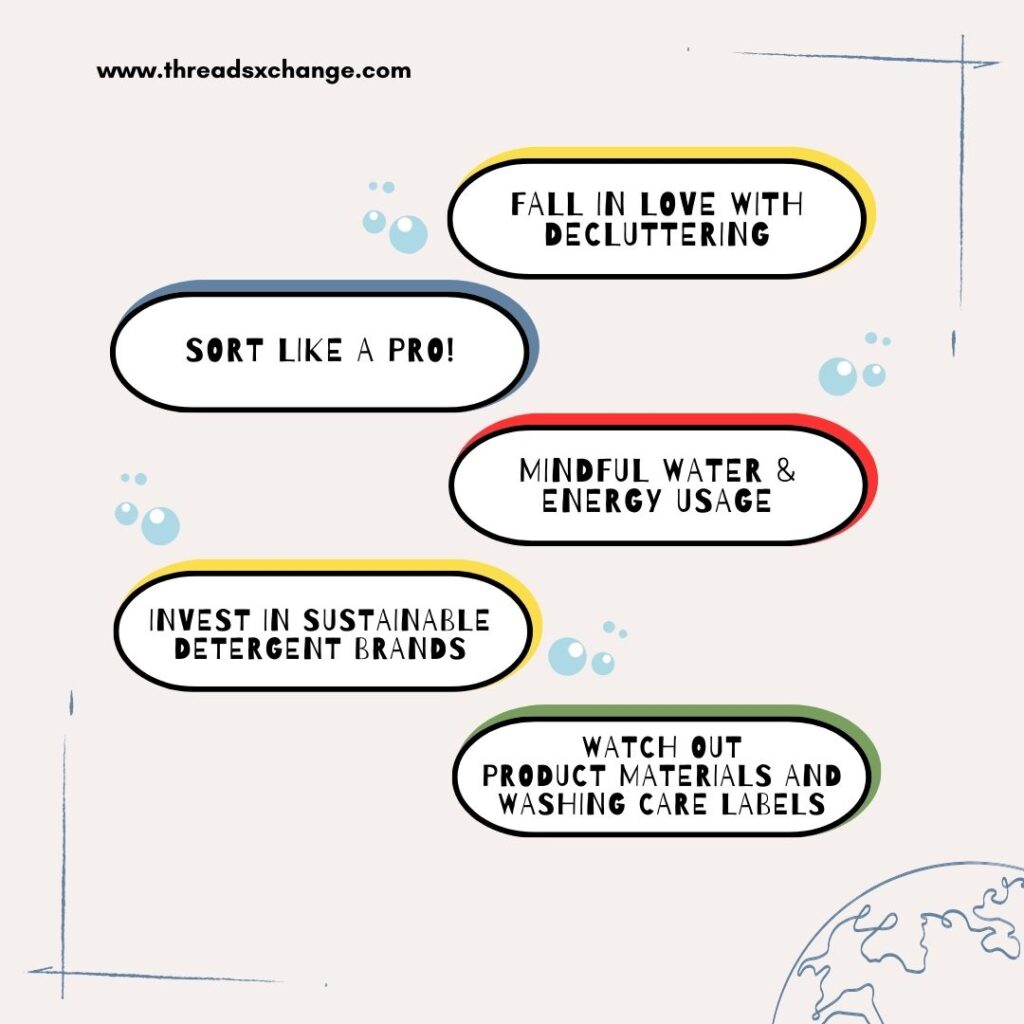
Fall in love with Decluttering
Hang or fold your clothes nicely after wearing. As our aim here is to reduce the washing frequency, hanging and folding your clothes nicely after wearing is a good way to keep them in fresh condition, ready for re-wearing. No issues to put them together with clean clothes as long as your wardrobe is airy and dry. But after a few wears and its ready-to-wash, the laundry basket is the place to-go.
Sort like a PRO!
Wash items according to colour and category extends the life of your garment. The common category is a light coloured, multi-coloured and undergarments load. Categorised in different wash bags is also another tip, it also helps prevent releasing of microfibers or microplastics. Colour separation does help maintaining the original colour condition on your clothes.
Mindful water and energy usage
Wash at low temperatures. Customise washing mode according to your laundry load. Ideally, accumulate garments that you need to wash in one go. Sun dry your clothes when the weather is good during spring summer. Wash less during autumn winter to minimise the usage of both washing machine and the dryer.
Invest in sustainable detergent brands
Laundry detergent capsules and sheets is really ‘a THANG’ in UK, which I’m totally grateful for – to fulfil my sustainable lifestyle goals. But! A lot of claimed “sustainable, eco-friendly” laundry detergent brands that promotes on your social feed, or Amazon, are actually sourced from elsewhere and ship them over, which probably comes from the same OEM (Original Equipment Manufacturer) factory.
Washing product is an essential, and it’s easily made if you want to do it yourself at home. So I don’t see a point why does a business make their “sustainable” detergents from other countries. Therefore, do search locally-made sustainable washing detergents/products, good for both local economy and environment.
I found this washing product brand online – Simple Living Eco [non-affiliated link]. Their products are made in Yorkshire, UK and most products used paper packaging in letterbox size – less packaging waste. I’m a user currently using their laundry sheets and stain remover spray, and after using a few times, proving its effective and useful, decided to do a shout-out for them. Something I like about the product is the clear user instructions such as indicating how many sheets for the exact size of load by kg. Some other brands I’ve used before only mentioned vaguely like big, medium or small load. I also appreciate their transparency where you can find an extensive list of FAQ on their website with clear information of the products in terms of ingredients, user instructions etc.
Aware of product material and washing care labels
If you are buying an item either new or second-hand, pay attention to the product material. From now on, choose natural plant-based fabrics, recycled single origin fabrics and try to avoid synthetic fabrics or mixed fabrics – as they are mostly fossil fuel derived materials and it causes more microplastics in our eco-system. Washing care label is next, machine washable and ‘Do not tumble dry’ items are usually easy to handle and more durable. Fun fact, back when I was working in high street fashion, I noticed 90% of the clothes are labelled with ‘Do not tumble dry’ symbol, proving that a tumble dryer is not a necessity and air dry is workable in damper climate too. But I do understand it saves a lot of work especially if you have a big family with kids. All in all, no restrictions when it comes to moderation and I can write another post about moderation and setting ethical values. Back to the topic, when you have a grasp on washing care labels, your clothes would naturally last longer. Attached with a comprehensive guide!
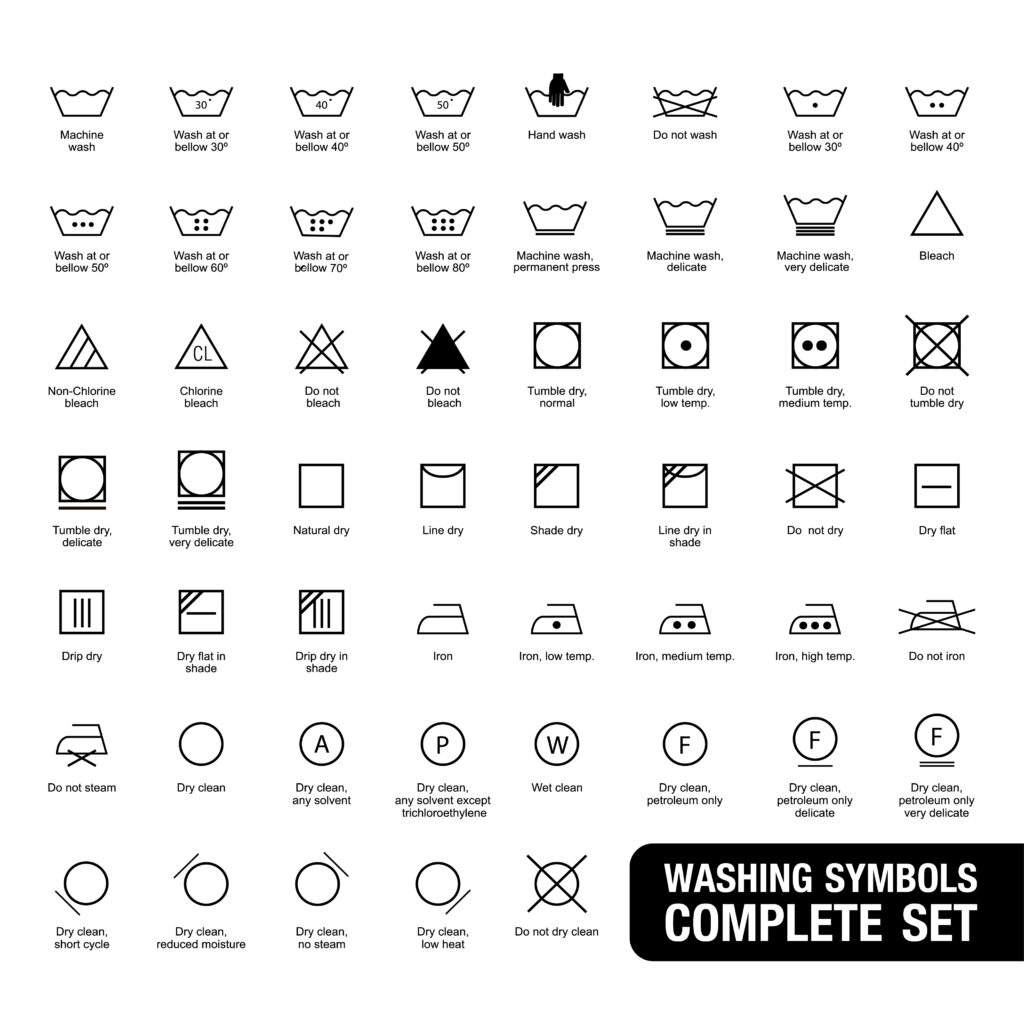
There you go, enjoy the art of a sustainable laundry routine!
Remember, cultivating a sustainable lifestyle is not going for the extreme. It’s about setting ethical values that are positive for the people, planet and animals.
Most importantly, be consistent.
useful references:
7 Simple Ways To Help Eliminate Microplastics In Your Laundry, https://www.vogue.co.uk/arts-and-lifestyle/
How Often Should We Wash Our Clothes, Exactly?, https://www.vogue.co.uk/article/
How many times can you wear pajamas, jeans and other clothes without washing them? Experts weigh in, https://edition.cnn.com/2023/02/02/health/
Are you washing your clothes too often?, https://www.bbc.co.uk/programmes/articles/
Tread lightly: Switch off your tumble dryer, https://www.theguardian.com/environment/
Leave a Reply