Have you ever noticed a sans-serif, clean and plain coloured ‘B’ logo on the shop front or a product that you like? If you look closer, it says ‘Certified B Corporation’.
What’s that? Who are they? What’s the B stands for?
B Corporation (or short formed – B Corp)
It is a certification certified by B Lab. This certification is a measurement of a company’s social and environment impact. From supply chain and input materials to charitable giving and employee benefits, B Corp Certification verifies that a business is meeting high standards of social and environmental performance, transparency, and accountability.
The B in B Corp stands for ‘Benefit for all’. The certification’s framework is categorised by 5 topics: Governance, Workers, Community, Environment, Customers (B Corp is currently working on a new standards of certification). To pass the certification, the company will need to score a passing mark of 80%. Certification fees are then paid annually, calculated based on your company’s total revenue on the last set of audited accounts (see the table in the B Lab website).
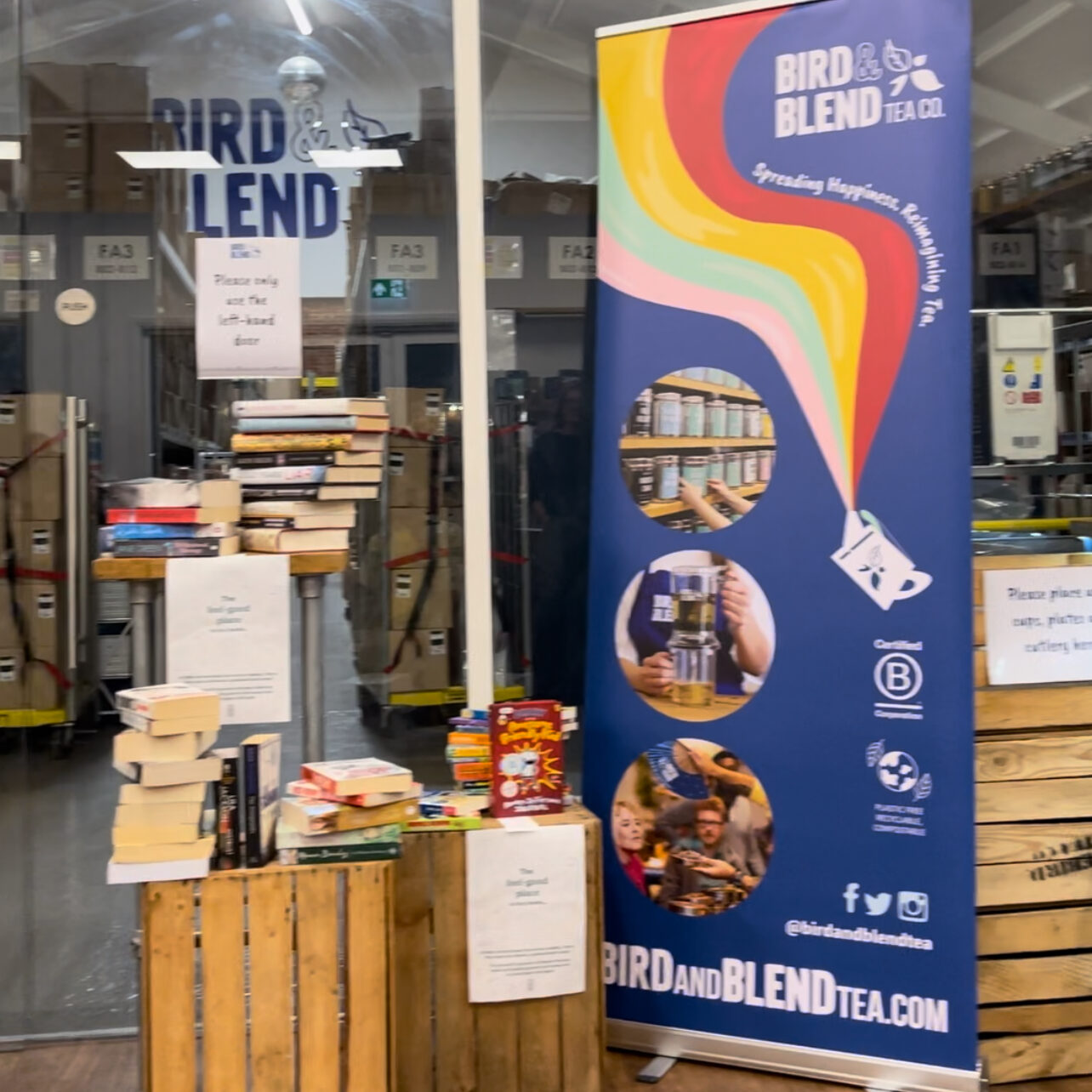
It was a pleasure to attend a SustainabiliTEA business chat, organised by our local tea specialist Bird & Blend Tea Co., in Worthing. Learning about the importance, benefits and behind the scenes of obtaining the certification. It is interesting to see the attendees’ participation and questions raised, which also made me think whether being a B Corp is like a cool kid on the block or not really? And would like to discuss with my fellow sustainable enthusiasts here. Let’s chat away!
Why it’s worth to be certified?
According to the B Lab, certifying as a B Corp brings lots of benefits including improving impact through participate and sharing best practices based on B Impact Assessment (BIA) and Sustainable Development Goals (SDG) with the B Corp community as well as working collaboratively. Effectively engage and communicate the company’s missions and values to both internally (employees) and externally (investors, customers, suppliers).
I personally feel it’s a great marketing tool, a good conversational starter for both B2B or direct to customers. B Corporation has a very sleek, clean and straightforward branding. Having the distinctive stamp on your products or the entrance of your shop gives a chance to your customers to raise questions and start a conversation. And for people who knows about it, possibly aligns to their personal values, then you might score a transaction at the till.
According to the panel of the business chat I attended, having the certification do benefits the company as they genuinely care for the people and planet over profit. With the B Impact Assessment, it works as a guideline or reminder to keep practising, to achieve their sustainable business goals or mission.
I totally agree to this as well as a sustainable lifestyle practitioner for almost 20 years now. From a kid who only understands recycling is good, until learning about the consequences of overconsumption and the nuances of sustainability. I certainly feel there’s a need of a check and balance system somewhere to help consumers to identify what’s good and what’s not. But, is B Corp the one?
To B or not to B, that’s the question.
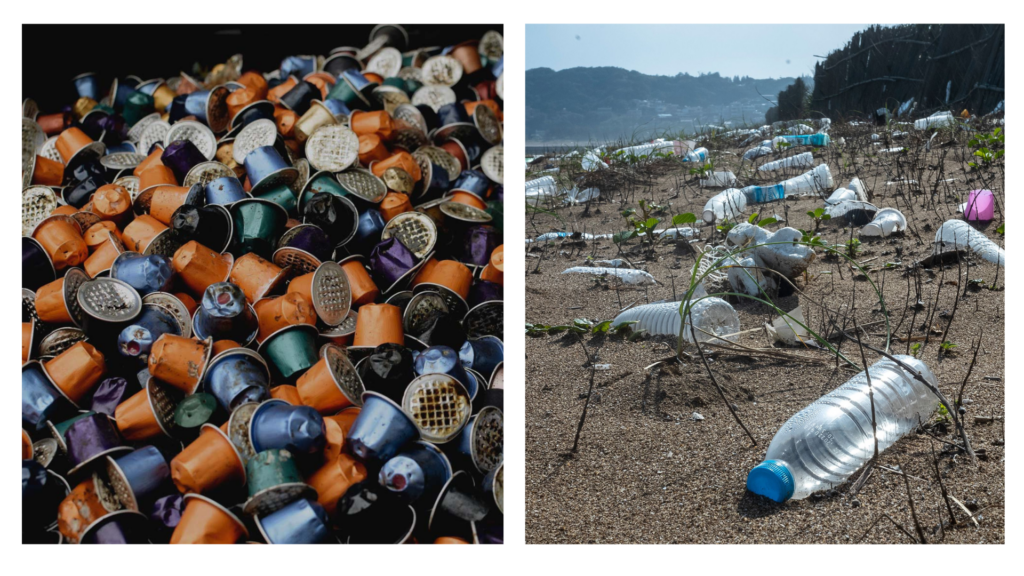
Controversies raised when a few multinational companies who are constantly producing single-use waste were certified as B Corp for example Evian, Innocent Drinks and Nespresso. This added question marks all over our heads. People starts to think B Corp Certification is possibly a form of greenwashing. There are a sea of articles written by experts such as journalists or political analysts, suggested that the B Corp certification actually doesn’t benefit in some aspects.
“The B Corp concept and those behind it might be well meaning, but there is no ‘win-win’ if certification does not fundamentally evolve the capitalist system, fight climate change and ensure justice, equity, diversity and inclusion.” says Micheal O’Regan in this article.
Hmm… Why?
After going down the rabbit hole reading and researching, a little voice in me, or compiled from many voices asked: Why do we need a third party certification to assess and prove a corporation’s positive actions, whereby the policy makers, government are suppose to legislate these sustainable development guidelines as a requirement to all existing or new businesses?
Why is the passing score set at only 80 out of 200? Aren’t all B Corps want to be seen as pioneers in the industry that are doing good environmentally and socially? How does B Lab define ‘Good’? Not even half of the total score?
What about future improvements? We are talking about sustainability here, aren’t we?
B Corps to gain Credibility
In my opinion, given the noises and scepticism of B Corp Certification’s credibility, the current certified B Corps should not only display their B Corp sticker, but also their current score on respective official websites or shop front (Individual scores can be found on B Corp’s Official Website). Similar to any local council hygiene and safety certification, it’s a requirement to display your score.
Because, what if a company merely score a passing mark of 80, stay stagnant without working hard to improve, yet they have the money to pay for the license? Is there any improvement requirements from B lab over time to get certified continuously? Will B lab stop recertifying if organisations don’t score higher each year?
I totally understand that all companies went through the same rigorous process to obtain the passing score especially there are 5 aspects to manage (and more coming soon). That is why, consumers deserved to see which areas needed improvement and what are the actions the company promised, to work towards higher scores, at the same time learn together and prove that certifications are credible.
According to an official release on 27 October 2023, under the new proposed standards, at recertification companies must prove continuous improvement, demonstrate ongoing compliance with the requirements, and share progress on topic-specific plans and goals. There’s a whole new set of standards for B Corp Certification and new guidelines coming soon. I am delighted to see that and currently it’s still in the discussion phase. No company will certify or recertify on the new standards for B Corp Certification before 2025. As consumers, let’s wait patiently.
What can B Lab do better?
Showing individual B Corp’s scores on their website is not enough. They should set higher benchmarks for existing B Corps. Set requirements and goals yearly in order to get recertified.
Transparency is something likely to explore. Who does check and balance for B Lab? What makes them the one, to judge and rate other companies’ social and environmental impact? What are the certification criteria based on?
According to the facilitator of the networking event, B Lab does consistently change their criteria based on the Sustainable Development Goals (SDG) set by UN. Furthermore, B Lab claimed “the climate crisis intensifies and societal inequality grows, the need to bring about systemic change is clear. We must advance the standards for B Corp Certification to meet the magnitude of the challenge ahead.” (Reference)
Other than requiring certified B Corps to be transparent, I discovered ‘the accountability of B Lab’ is in every analysts’ discussion. If the B Lab certified Nespresso as a B Corp, what are their actions to improve the situation when there’s only 32% of aluminium coffee pods been recycled back to their system (2021 data recorded in Nespresso’s latest Positive Cup report 2022)?
All B Impact Assessments are self-assessed based. B Lab assigns a team to call the company that wants to get certified and go through the assessment, provided with documentation and evidences. Any auditors present on site to assess in person? Unlikely, according to resources.
Well, before making your verdict, please continue reading.
As consumers, what should we do?
Stay sceptical. Stay curious. On the other hand, having these certifications is a good monitoring tool for the public to set high standards towards them. Every single action made by the company, the public should magnify and analyse constructively.
Be a watchdog. There’s a complaint button on the official B Corp website for you to raise an issue. Raise questions to them if we find something questionable. Why is this B Corp using disposables for their private events? Why is this B Corp shipping their products internationally by air freight, is the air freight company using biofuels? Why is this B Corp using packaging that I can’t even throw into my kerbside recycling bin or home compost bin? Do they really deserved being certified?
Besides looking at certifications, consumers also need to identify respective local small business that are genuinely working towards sustainable development goals, who might not have the capacity to pay for B Corp or any certification. We all know our local producers the best and they are the ones who always greet us warmly, know our names, suggesting us what’s best. In return, a support and word of mouth is certainly helpful.
In a Nutshell
Certification works as a monitoring, marketing tool and gaining assurance from the public. Same goes to our academic qualification, works as an entrance ticket to get through companies with a job opportunity or a tool for people to identify our capabilities.
Existing B Corps should understand that the certification must not use it as a sugar coat, looking pretty and nice on the outside. But to constantly self assess by using the criteria and guidelines, truthfully agreeing people and planet over profit. I certainly believe there are B Corps genuinely do what they preached.
I don’t think B Corp Certification is greenwashing or bad, but there’s always room for improvement, which they are also doing it. I am a huge believer in collaborative work. All parties have to work collaboratively for a system to succeed. This movement definitely comes with a positive impact but it’s also up to us, how do multiple stakeholders practice and deal with it?
It’s absolutely a siren call for governments and key policy makers to work harder than every green certifications in the market. As mentioned, B Lab is suggested to act as a transparent body, set high standards and adapt to any societal or environmental change. B Corps to cooperate and strive towards the same goals and prove that certifications work. Lastly, consumers be the whistle blower whenever something seems sceptical.
Co-operation is key. There’s never a magic pill or the ONE solution to define ethics, but co-operate in a constructive way certainly helps, which isn’t easy. But, it’s the imperfection that we all need to accept and embrace.
What are your thought? Comment down below.
References:
https://www.bcorporation.net/en-us/certification
https://www.bcorporation.net/en-us/standards/performance-requirements
https://bcorporation.uk/b-corp-certification/the-certification-process/pricing
Leave a Reply